

Why Local Sports Betting Gets You Better Odds (And How to Use It)
Winning at sports betting in southwestern Ontario comes down to one advantage most bettors ignore: proximity to the action. While national betting sites rely on generic algorithms and surface-level stats, living in the region puts you closer to the locker rooms, the community buzz, and the insider perspectives that reveal where the betting lines get it wrong.
The gap between what oddsmakers think they know and what’s actually happening on the ground creates real opportunity. A star player nursing an undisclosed injury during practice. A junior team riding momentum after a coaching change that hasn’t yet shown up in the numbers. A high school phenom whose playoff performance is about to shift recruitment odds. These aren’t secrets, they’re simply information that regional bettors can access faster and interpret better than algorithms built thousands of miles away.
This advantage only works if you know how to use it. The difference between casual betting and profitable strategy lies in systematic research, disciplined bankroll management, and the ability to separate emotion from analysis. Southwestern Ontario’s sports landscape, from OHL arenas to university athletics and emerging local talent, offers a testing ground where attentive bettors can identify market inefficiencies before they correct.
The insights that follow draw on years of behind-the-scenes coverage and award-winning commentary to show you exactly how to turn regional knowledge into betting edge. You’ll learn which local factors move lines, how to validate community intelligence, and where bookmakers consistently undervalue regional performance patterns.
The Home Field Advantage You’re Not Using

Most bettors treat southwestern Ontario sports events like any other line on their board. They check the odds, glance at recent form, and place their wagers from a desktop hundreds of miles away. That approach leaves money on the table.
When you live where the games happen, you have access to information that never makes it into the algorithms. You know that the outdoor rink in Stratford runs fifteen degrees colder than forecast temperatures suggest because of wind patterns off the river. You’ve seen how the London Ice House boards play faster after the zamboni operator switched shifts in January. These aren’t trivial details, they’re the difference between a close game and a blowout when you’re betting on junior hockey totals.
Weather becomes a genuine edge in regional sports. The Thursday morning forecast matters less than knowing which fields in Kitchener-Waterloo drain poorly, which baseball diamonds in Sarnia turn into bogs after overnight rain, or how humidity affects shooting percentages at specific gyms. Distant bettors see “partly cloudy, 12 degrees” and move on. You understand that an east wind at Alumni Field means the home team quarterback faces a crosswind on every possession heading south, a factor that’s changed outcomes in three of the last five games there.
Community dynamics create subtler advantages. University rivalries intensify differently when both campuses sit twenty minutes apart versus when teams meet once per season. The research on crowd support and home advantage focuses on professional leagues, but you’ve watched how a packed student section at Western affects referee tendencies in tight matches against Windsor. You notice when local media controversy changes a team’s mindset heading into Friday night, or when a municipal funding dispute impacts ice time allocation for a junior squad.
Insider access matters most. You can attend practices open to the public, talk to parents at weekend tournaments, and follow local beat reporters who actually watch these teams instead of copying box scores. You’ll spot a starting goalie nursing a hip injury three days before the sportsbook adjusts their lines. You’ll know a team’s fourth-line enforcer just got suspended, which matters enormously in a league where depth separates contenders from pretenders.
This isn’t speculation, it’s systematic observation turning geography into advantage.
Where Sportsbooks Get Local Events Wrong
Major sportsbooks build their lines using algorithms fed by national data streams, professional statistics services, and high-profile game histories. When they turn to regional southwestern Ontario sports, OHL games outside London or Windsor, OUA basketball, semi-pro soccer leagues, that infrastructure breaks down. The data gets thinner, the models rely on outdated inputs, and the odds become vulnerable.
Junior hockey presents the clearest example. A Tier II team playing its fifth game in seven days might open at -140 against a rested opponent, simply because the book’s algorithm weighs season records without accounting for the brutal schedule. National betting platforms don’t track practice cancellations, bus breakdowns on Highway 401, or the backup goalie getting called up mid-week. You do, if you’re paying attention locally.
University sports amplify this gap. When Western meets McMaster in basketball, the line often mirrors their overall records rather than recent form, roster health, or exam-week fatigue. A sportsbook in Nevada isn’t monitoring which starters missed practice Tuesday or how travel disruptions from a February snowstorm affected preparation. Research confirms online sportsbooks mispricing regional markets where information asymmetry exists between local and distant bettors.
Common mispricing scenarios include:
- Back-to-back games where travel distance isn’t factored into the spread
- Rivalry matchups priced on season stats rather than historical head-to-head intensity
- Weather impacts on outdoor venues ignored in totals for soccer or baseball
- Key player absences not reflected when rosters update hours before game time
- Home-ice advantage undervalued for teams with exceptionally vocal or disruptive fanbases
Semi-pro leagues face even wider inefficiencies. When Chatham plays Sarnia in senior lacrosse, the opening line might be pure guesswork, a coin flip dressed as analysis. The sportsbook knows few bettors will touch it, so they don’t invest resources in accurate pricing. That indifference creates opportunity, provided you’ve done the groundwork they haven’t.
Reading the Signals Other Bettors Miss
Behind-the-Scenes Team Intelligence
The betting edge you’re looking for sits right there in your Twitter feed, if you know where to look. While national bettors rely on injury reports and stat sheets, you can tap into the pulse of southwestern Ontario sports through beat reporters who actually attend practices.
Start by following local sports journalists who cover university and junior teams in your region. They often tweet practice observations, a star forward favoring his ankle during drills, a goalie taking limited reps, line combinations being shuffled days before game time. This isn’t insider information; it’s publicly available intel that distant bettors simply never see. Set up Twitter lists specifically for London Knights reporters, Western Mustangs coverage, and regional sports writers. Check them daily, not just on game days.
Community sources matter more than you’d think. Parents of players often discuss lineup changes in local Facebook groups. Youth hockey coordinators know when junior teams are dealing with illness outbreaks that haven’t hit official channels yet. Attend a few games early season and strike up conversations with regulars who’ve watched these teams for years. They’ll mention a defenseman playing through a shoulder issue or a coaching staff conflict affecting team morale.
Direct observation beats everything. Watch warm-ups when you attend games. A player skating gingerly, a goalie testing lateral movement cautiously, or unusual line pairings all signal adjustments that sportsbooks won’t price in until puck drop. This groundwork separates profitable local betting from gambling on incomplete information.
Venue-Specific Patterns That Matter
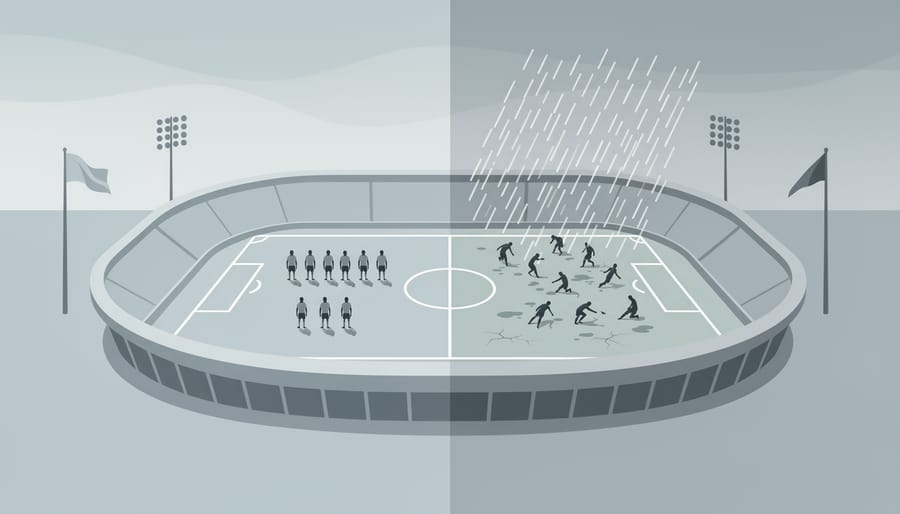
Every rink in southwestern Ontario has its quirks, and the betting edge comes from knowing which ones actually matter. The Budweiser Gardens ice tends to get soft in the third period during weekend doubleheaders, visiting teams that rely on speed lose half a step when it counts most. Meanwhile, Western University’s TD Stadium has that notorious west wind that kicks up after 2 PM, turning what looks like a straightforward football game into a punting battle where the team with the ball in the fourth quarter often loses field position.
Temperature swings hit outdoor venues hardest. Chatham’s Memorial Arena runs cold enough that pucks bounce differently in November versus March, and arena ice quality affects play in measurable ways that sportsbooks rarely account for. Track how visiting teams perform when they’re used to pristine OHL ice versus the choppier surfaces at community rinks hosting junior games.
Crowd dynamics matter more than you’d expect in smaller venues. Windsor’s WFCU Centre packs 6,000 rowdy fans behind one net, creating genuine home-ice advantage. Compare that to half-empty weeknight games in Sarnia where the atmosphere flatlines and home teams often play tentative. Note which venues consistently draw engaged crowds versus those where announced attendance means nothing, empty seats show up in uninspired play and tighter-than-expected spreads.
Smart Money Management for Regional Events

Regional sports betting requires a different bankroll approach than mainstream markets. The limited liquidity and information asymmetry that create your edge also demand tighter risk management.
Start with the 1-2% rule, but apply it conservatively for local events. If you’d stake 2% on an NFL game, cap regional bets at 1% of your total bankroll. A $2,000 bankroll means $20 maximum per local event, not $40. Lower-profile games carry higher variance, and even solid research can’t account for every variable when the team’s social media presence is their only public information source.
The familiarity trap kills more local bettors than bad analysis. You watch these teams regularly, know the players’ tendencies, maybe even grab coffee at the same spot as the coaching staff. That proximity breeds confidence, but confidence isn’t edge. Track your win rate honestly over 50+ bets before increasing stake sizes, and if you’re hitting 54-56% on regional events, you’re doing well, not crushing it enough to double your bet sizes.
Liquidity matters more than you think. A $100 bet on a junior hockey game might move the line at smaller books, especially close to game time. If you’re betting significant amounts relative to the market, get your action in early or split it across multiple platforms. Chasing better odds by waiting often backfires when the sharp money, yes, there are sharps watching these games, takes the value first.
Set weekly limits for regional betting separate from your main bankroll. Allocate maybe 20-30% of your weekly betting budget to local events, regardless of how many “locks” you spot. The season is long, the opportunities recurring. You don’t need to bet every University of Western Ontario home game or every Chatham-Kent Barnstormers match. Selectivity preserves capital and sharpens focus.
The best local bettors I know maintain spreadsheets tracking not just wins and losses, but confidence levels, information sources, and why specific bets won or lost. That discipline transforms hunches into systems.
Building Your Local Betting Framework
Creating a reliable framework for local sports betting isn’t about following a rigid formula, it’s about building a flexible system that adapts to southwestern Ontario’s unique sports landscape while keeping your decision-making disciplined.
Start by establishing your coverage territory. Focus on leagues and teams within a two-hour radius of your location. This geographic limit ensures you can attend games when necessary, access local media coverage effectively, and maintain genuine familiarity with the venues and communities. Spreading yourself across too many regions dilutes the local advantage you’re trying to leverage.
- Identify your core leagues and teams. Choose two to four specific competitions where you’ll develop deep knowledge, perhaps Western University hockey, a junior A league, and a semi-pro baseball circuit. Document team rosters, coaching staff, and home venues for each.
- Create information sources for each league. Compile beat reporters’ social media accounts, local newspaper sports sections, team websites, and relevant Facebook groups or forums where real community insight surfaces.
- Build a tracking spreadsheet. Record line movements, your pre-game assessments, actual results, and post-game notes on what factors you missed or correctly identified. Track not just wins and losses but the quality of your analysis.
- Establish evaluation criteria specific to each sport. For junior hockey, this might include recent roster additions, back-to-back game situations, and rivalry dynamics. For university sports, academic calendar pressures and exam schedules matter.
- Set clear betting triggers. Define the specific conditions that justify placing a wager, perhaps a three-point line discrepancy from your assessment, or identifiable information gaps the sportsbook hasn’t accounted for.
- Schedule weekly review sessions. Every Sunday, analyze the previous week’s bets, update your league notes, and identify upcoming opportunities based on schedule releases and roster news.
The framework evolves as you learn. After three months, you’ll notice patterns in which factors reliably predict outcomes versus which seemed important but proved irrelevant. A London Knights game after a long road trip might consistently underperform expectations, while Windsor teams playing on Friday nights show unexpected resilience.
Document your learning ruthlessly. When you’re wrong, determine whether your analysis was flawed or you simply got unlucky. This distinction matters because bad process occasionally yields good results, and good process sometimes loses, but only disciplined tracking reveals which is which.
Your framework should include an off-season component too. Summer months offer opportunities to research coaching changes, recruiting classes, and facility upgrades that will impact the coming season. The bettors who wait until games start are already behind those who understood roster transformations months earlier.
Local knowledge isn’t just an advantage in southwestern Ontario sports betting, it’s the foundation of sustainable success. While casual bettors chase widely publicized games with efficient markets, you now understand how regional insights create exploitable opportunities that major sportsbooks consistently misprice.
The framework you’ve built, tracking venue patterns, monitoring community sources, reading weather impacts, and staying connected to roster developments, transforms betting from guesswork into informed decision-making. This edge compounds over time as you refine your understanding of specific teams, venues, and seasonal rhythms.
But knowledge alone won’t protect your bankroll. Discipline matters as much as insight. Stick to your unit sizing, resist the temptation to overbet hometown favorites, and remember that even strong local intel doesn’t guarantee outcomes. The best bettors win through consistent application of sound principles, not occasional lucky streaks.
Stay engaged with your regional sports community. Attend games when possible, follow local beat reporters, and contribute to discussions that deepen your understanding. This ongoing connection keeps your edge sharp and your perspective grounded.
Most importantly, bet responsibly. Set limits, track results honestly, and recognize when to step back. The goal isn’t chasing losses or proving theories, it’s making smart, selective wagers based on genuine advantages you’ve worked to identify. Your proximity to southwestern Ontario sports is an asset. Use it wisely, bet thoughtfully, and let long-term discipline turn local knowledge into lasting success.