
NHL Canucks Player News Update: What Changed and What to Watch in 2026
The Vancouver Canucks roster heading into the 2026-27 season carries significant question marks, with key injured reserve placements and a blend of veteran stability and untested youth shaping the team’s competitive outlook. Back in March 2026, the club placed defenseman Pierre-Olivier Joseph and goaltender Thatcher Demko on injured reserve, moves that rippled through lineup calculations and cap management. Now, as training camp approaches, the blue line features both experience and fresh blood: 36-year-old Luke Schenn brings playoff-tested grit, while 21-year-old prospect Tom Willander represents the organization’s bet on its development pipeline.
For fans tracking betting angles and fantasy implications, injury timelines matter. Derek Forbort’s hip injury keeps him sidelined until at least mid-September, while Evander Kane’s upper body issue leaves his season-opening availability in doubt. These aren’t just roster footnotes. They’re the difference between contending depth and scrambling for replacement options when the Pacific Division race tightens. Behind the scenes, management faces tough decisions: lean on veteran insurance or accelerate younger talent into bigger roles. The answers will define whether Vancouver stays in the playoff conversation or falls short once again.
What Changed: Recent Canucks Player Developments
The Vancouver Canucks organization has seen significant roster movement as the 2026-27 season approaches, with three major storylines shaping the team’s outlook. March 3, 2026 brought consequential injury news when the club placed defenseman Pierre-Olivier Joseph on injured reserve and goaltender Thatcher Demko on long-term IR, forcing immediate adjustments to the lineup. Meanwhile, the current roster sheet reveals strategic personnel decisions: 36-year-old defenseman Luke Schenn returns to provide veteran stability, while 21-year-old prospect Tom Willander earns his spot, signaling management’s commitment to blending experience with youth. Injury concerns extend beyond the March placements, as Derek Forbort (hip), Filip Chytil (face), and Evander Kane (upper body) remain sidelined heading into camp.
These interconnected roster changes and health situations have reshaped the Canucks’ depth chart at multiple positions, creating both challenges and opportunities as the organization prepares for the upcoming campaign.
1. Injury Reserve Moves Reshape Defensive Corps
On March 3, 2026, the Vancouver Canucks made two significant roster moves that fundamentally altered their defensive structure and goaltending depth. The team placed defenseman Pierre-Olivier Joseph on injured reserve while moving goaltender Thatcher Demko to long-term injured reserve, creating immediate gaps that would force organizational depth players into expanded roles.
The Joseph placement stripped the Canucks of a mobile, puck-moving blueliner who had been logging regular minutes in their rotation. While the specific nature of his injury wasn’t disclosed, standard injured reserve rules meant he’d miss a minimum of seven days, disrupting the defensive pairings the coaching staff had been working to solidify. For a team trying to establish consistent chemistry on the back end, losing Joseph removed a versatile piece who could slot into different lineup configurations depending on matchup needs.
Demko’s long-term IR designation carried far heavier implications. As the franchise’s starting goaltender, his absence triggered a cascade of adjustments to the netminding hierarchy. Long-term injured reserve requires a minimum 10-game and 24-day absence, signaling this wasn’t a minor setback. The Canucks suddenly faced the prospect of leaning heavily on their backup tandem, raising questions about whether their goaltending depth could sustain a playoff push.
These moves forced the front office to evaluate internal options immediately. With two roster spots to fill and the March transactions coming at a critical point in the season, the team needed players ready to step in without a learning curve. The defensive corps, already managing workload distribution across six regulars, now had to absorb Joseph’s minutes while integrating whoever got the call-up. Meanwhile, goaltending depth became a legitimate concern rather than theoretical insurance, transforming how the coaching staff approached back-to-back games and high-leverage matchups down the stretch.
2. Veteran Presence and Youth Injection: 2026-27 Roster Takes Shape
The Canucks’ 2026-27 roster composition tells the story of a franchise refusing to choose between competing today and building tomorrow. Luke Schenn’s return at 36 brings playoff-tested grit to a blueline that suddenly needed reinforcement after the injury reserve moves in early March. Meanwhile, Tom Willander’s addition at 21 represents the organization’s commitment to developing the next wave of defensive talent. This isn’t just roster management; it’s strategic architecture designed to keep the team competitive while ensuring sustainability beyond the current window.
Schenn brings something the spreadsheets can’t quantify: institutional memory and locker-room credibility. His previous stint with Vancouver established him as a reliable presence in high-leverage situations, the kind of defender who doesn’t flinch when assignments get physical. At 36, he’s not logging top-pair minutes, but he provides the depth versatility that becomes invaluable during the grind of an 82-game season. The front office knows exactly what they’re getting, steady, dependable minutes that allow younger players to develop without being thrown into situations they’re not ready to handle.
Willander represents the opposite end of the timeline, but his inclusion in the 2026-27 roster speaks to genuine confidence rather than empty promise. The organization clearly believes he’s ready to absorb NHL-caliber competition rather than marinate in junior or AHL systems. That’s a significant vote of confidence for a 21-year-old defender entering a league where mistakes get punished with surgical precision.
- Defensive corps now spans 15 years in age range, from Willander at 21 to Schenn at 36
- Roster composition balances immediate playoff ambitions with long-term sustainable competitiveness
- Dual approach allows veteran leadership to shield prospects from premature top-line responsibilities
- Strategic depth provides insurance against injury situations while maintaining competitive standards
The real calculation behind these moves becomes clear when you consider the injury landscape that forced Pierre-Olivier Joseph onto IR. The Canucks needed immediate defensive help but couldn’t afford to sacrifice future assets through desperate trades. Schenn provides the now; Willander represents investment in what comes next. It’s the kind of roster construction that keeps teams relevant across multiple seasons rather than mortgaging everything for a single playoff push. Vancouver’s management has clearly learned that sustainable success requires threading both timelines simultaneously.
3. Ongoing Injury Concerns Heading into the Season
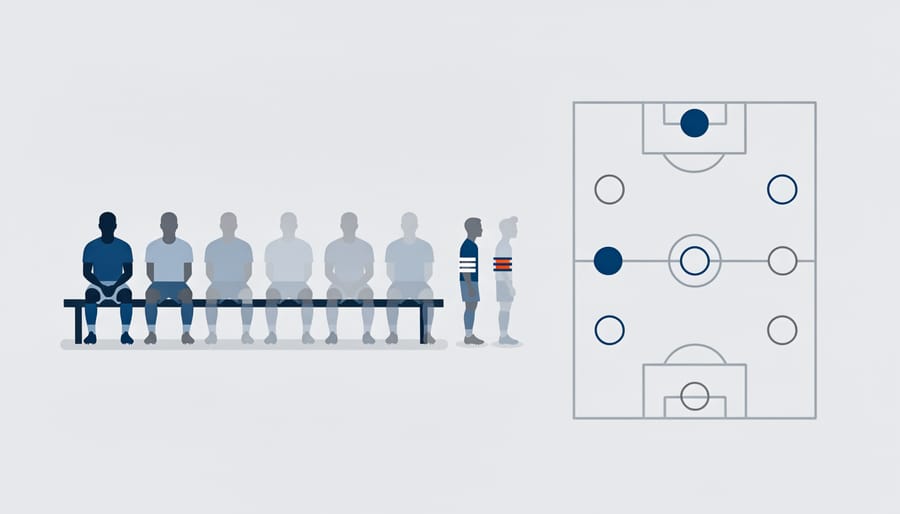
The Canucks are managing several notable injury concerns that could affect lineup continuity early in the 2026-27 campaign. Derek Forbort’s hip injury is the most substantial short-term question mark, with the defenseman sidelined until at least mid-September. His absence removes a veteran presence from the blue line during training camp and potentially the opening stretch, putting additional pressure on younger defenders to step into expanded roles. Filip Chytil’s facial injury carries a similar timeline, keeping the forward out until September 15 at the earliest. While the expected return dates suggest both players could be available for the season opener, any setbacks in rehabilitation would force the coaching staff to adjust their preferred forward combinations and defensive pairings.
Evander Kane’s upper body injury adds another layer of uncertainty, with his status listed as questionable heading into the season. The lack of specificity around both the injury type and recovery timeline makes Kane the most difficult player to project for early-season planning. His offensive production and physical style make him a key component when healthy, but the questionable designation suggests the medical staff is taking a cautious approach. These three absences collectively thin the organizational depth at a critical juncture. The coaching staff will need contingency plans for multiple scenarios, from full health to extended absences, which complicates chemistry-building during the preseason and potentially forces younger prospects into meaningful minutes before they’re fully ready.
Why It Matters: Impact on the Canucks’ Season Outlook
The compounding effect of these roster moves creates a precarious early-season situation for the Canucks. With Demko sidelined long-term and defensive depth already tested by Joseph’s absence, the team enters 2026-27 without its foundational goaltender and with a reshaped blue line that blends Schenn’s playoff-tested reliability against Willander’s first-year learning curve. That’s not simply a depth chart adjustment, it fundamentally alters how the coaching staff can deploy matchups and manage minutes when opponents pressure the net.
Salary cap flexibility becomes critical here. Long-term IR placement for Demko provides temporary relief, but the team still needs to allocate resources toward filling immediate gaps while preserving options for mid-season reinforcements. The retention of a 36-year-old defenseman signals prioritization of steady, known performance over cheaper alternatives, a calculated bet that experience matters more than marginal cap savings when your goaltending situation is uncertain and young defenders need insulation.
Lineup construction faces constant recalibration. Forbort’s hip issue and Kane’s upper body concerns eliminate veteran depth pieces who typically absorb tough minutes and provide insurance when games turn physical. The coaching staff loses roster flexibility, fewer options means less ability to adjust on the fly when matchups demand it or when the schedule compresses. That constraint ripples through special teams assignments, penalty kill rotations, and how aggressively the team can push pace without risking further attrition.
For anyone following the team closely or considering angles through local sports betting these developments shift expectations. A healthy Canucks squad with Demko anchoring the crease and full defensive depth projects differently than one navigating injury returns, prospect integration, and veteran stop-gaps. The gap between ceiling and floor widens considerably, making early-season performance a genuine question mark rather than a predictable trajectory.
What to Watch: Key Storylines for Canucks Fans
With several critical situations unfolding simultaneously, Canucks fans have multiple storylines demanding close attention as the 2026-27 season progresses. The recovery timelines for Demko and Joseph will dictate defensive stability and goaltending depth throughout the campaign, while the shorter-term absences of Forbort, Chytil, and Kane could test organizational depth before those players return to action.
Tom Willander’s development represents perhaps the most intriguing long-term narrative. How quickly the 21-year-old defenseman adapts to NHL speed and whether he can earn consistent playing time alongside veteran presence like Schenn will shape the team’s defensive identity for years to come. His progression matters not just for immediate roster composition but for the franchise’s broader timeline of contention.
How can I stay updated on the latest Canucks roster changes?
The official Vancouver Canucks website and publish real-time roster updates, transaction announcements, and injury reports. Following the team’s verified social media accounts also provides immediate notifications of player moves.
What does injured reserve mean for a player’s availability?
Injured reserve (IR) requires a player to miss at least seven days, while long-term injured reserve (LTIR) mandates at least ten games and twenty-four days out. These designations create salary cap relief but guarantee extended absences.
Where can I find official injury reports for NHL teams?
maintains comprehensive injury lists updated daily, while individual team websites provide detailed status reports and expected return timelines for their players.
Salary cap management deserves monitoring as well. The LTIR placements create temporary flexibility, but how the front office leverages that space, whether for call-ups, trades, or maintaining reserves, will influence the team’s ability to navigate adversity. Watch for potential roster adjustments if injuries persist longer than anticipated or if emerging prospects force difficult roster decisions through exceptional performance.