

Vancouver Whitecaps MLS Soccer Matches: Schedule, Tickets, and What to Expect at BC Place
Vancouver Whitecaps FC brings Major League Soccer to British Columbia Centre Place Stadium, offering Ontario-based fans and bettors a Western Conference team worth tracking for both live attendance when traveling west and strategic wagering opportunities. The club competes in a 34-game regular season schedule from late February through October, with home matches typically drawing 20,000-plus supporters in one of MLS’s most passionate atmospheres.
For southwestern Ontario sports enthusiasts, the Whitecaps present a unique proposition. The team’s three-hour time difference means evening kickoffs land squarely in primetime viewing windows back east, while the franchise’s consistent mid-table positioning creates volatility that sharp bettors can exploit. Unlike Toronto FC’s hyper-scrutinized lines, Vancouver markets often carry softer numbers, particularly on player props and alternative spreads.
Getting to a match requires planning. Direct flights from Toronto Pearson to Vancouver International run under five hours, and the stadium sits just 20 minutes from downtown via SkyTrain. Single-match tickets start around $35 for upper bowl seats, though the Southside supporter section delivers the authentic experience for roughly $45. Plan to arrive 90 minutes early if you want pre-match atmosphere and food options beyond standard concession fare.
Behind the scenes, the Whitecaps operate as one of MLS’s more analytically-driven organizations, emphasizing possession-based soccer that translates to predictable betting patterns. Under totals historically perform well at BC Place, where the artificial turf speeds up play but the club’s defensive structure keeps scorelines tight. We’ll break down how to navigate their schedule, decode their tactical approach, and identify value in a betting market that doesn’t always price this Western outpost accurately.
The Vancouver Whitecaps MLS Experience

The Vancouver Whitecaps deliver one of MLS’s most underrated match-day experiences, set against the dramatic backdrop of BC Place’s retractable roof stadium in downtown Vancouver. The 22,120-seat venue creates an intimate yet electric atmosphere that distinguishes West Coast soccer from the sprawling facilities common in other conferences. When the roof closes for evening matches, the acoustics amplify the supporter sections into a wall of sound that rivals any stadium in the league.
What sets the Whitecaps apart is their identity as the lone Canadian MLS club in the Western Conference, fostering a unique blend of national pride and regional rivalry. The Southsiders and Rain City Brigade supporter groups occupy the south end of BC Place, maintaining 90 minutes of organized chanting, flag displays, and coordinated tifo presentations that bring European-style passion to North American soccer. These aren’t passive spectators, they’re choreographed participants who view supporting the club as active collaboration rather than observation.
The team’s on-field identity has evolved toward a technical, ball-control approach that contrasts with the more direct styles favored by many MLS sides. Under recent coaching philosophies, Vancouver emphasizes building from the back and patient possession sequences, making their matches tactically intriguing for students of the game. This style occasionally frustrates fans craving end-to-end action but rewards those who appreciate positional discipline and structured attack patterns.
The Pacific Northwest soccer culture permeates everything, from the craft beer selections in concourse stands to the sustainability initiatives BC Place promotes. Match days feel distinct from the corporate polish of newer MLS stadiums, maintaining an authentic supporter-driven character that reflects Vancouver’s independent sports identity. For Ontario fans accustomed to Toronto FC’s atmosphere, the Whitecaps offer a smaller-scale but equally devoted fan experience with distinctly West Coast sensibilities.
Finding and Securing Match Tickets

Season Ticket vs. Single-Match Options
Season tickets typically run $500-$1,200 per seat depending on location, locking in 17 regular-season home matches plus potential playoff access. You’re paying upfront but gaining priority renewal rights, exclusive merchandise discounts (usually 15-20%), and first dibs on additional events at BC Place. The math works if you’ll attend at least 12 matches, below that threshold, single-game purchases make more financial sense.
Single-match tickets offer flexibility without commitment. Prices fluctuate based on opponent and day of week, ranging from $30 for upper-bowl weeknight games to $90+ for Saturday rivalry matches. You control which fixtures you attend and can wait for promotional deals the club runs periodically. The downside? No seat guarantee for marquee matchups, and you’ll miss out on those season-ticket holder perks.
Consider a partial season package as middle ground, half-season plans (8-9 matches) start around $300 per seat and include some cardholder benefits. These work well for out-of-town fans planning occasional Vancouver trips or locals testing the waters before committing to a full season.
Away Fan Sections and Visitor Access
Traveling supporters congregate in sections 249-253 at BC Place’s north end, where away fan groups receive designated space separate from home support. Ontario fans following Toronto FC or other Eastern Conference rivals should purchase tickets through these sections to join organized supporter culture, though the venue doesn’t strictly enforce segregation, you can sit elsewhere if you prefer a mixed atmosphere.
Arrive early if you’re bringing drums, flags, or tifos; security checks supporter equipment at dedicated gates. The away section offers direct sightlines to one goal and easy access to concessions and restrooms. Cross-country visitors often combine match attendance with Vancouver tourism, making weekend fixtures ideal. Book accommodations near SkyTrain stations for seamless game-day transit, and expect passionate but generally respectful engagement from home fans in surrounding sections.
Understanding the Match Schedule and Format
The MLS regular season runs from late February through mid-October, with each team playing 34 matches over roughly eight months. The Whitecaps split these fixtures between home games at BC Place and away trips across North America, typically hosting 17 matches in Vancouver throughout the season.
Unlike traditional soccer leagues that feature balanced home-and-away schedules against every opponent, MLS uses a conference-based format with weighted scheduling. The Whitecaps face Western Conference rivals multiple times while meeting Eastern Conference teams less frequently. This structure creates natural rivalry intensity with teams like Seattle, Portland, and LAFC while limiting cross-conference matchups.
Home matches typically occur on weekend afternoons or Saturday evenings, though midweek fixtures appear periodically due to scheduling constraints and international breaks. The league often front-loads Vancouver’s schedule with more away matches early in the season, then stacks home games during summer months when weather conditions favour attendance.
To track current fixtures, start with the official Whitecaps website or the MLS app, both offering real-time schedule updates with confirmed dates and kickoff times. These platforms adjust for television scheduling changes and playoff qualification scenarios that can shift fixture timing late in the season.
The regular season determines playoff positioning through a points system: three points for wins, one for draws, nothing for losses. The top seven teams from each conference advance to the MLS Cup Playoffs beginning in late October. Vancouver’s playoff appearances create additional home match opportunities if they qualify, though postseason fixtures follow different scheduling patterns based on seeding and knockout-round progression.
Plan ticket purchases around confirmed fixtures rather than tentative dates, as television broadcasters occasionally shift match times with minimal advance notice.
Betting Angles for Whitecaps Matches
Key Performance Indicators to Track
Sharp bettors tracking Vancouver don’t just glance at league standings, they dig into possession differential and expected goals (xG) metrics that reveal whether recent results match underlying performance. When the Whitecaps’ actual goal tally lags behind their xG over a three-match stretch, value often emerges on their next home fixture at BC Place.
Set-piece efficiency matters considerably in MLS, where defensive organization varies widely. Vancouver’s conversion rate from corners and free kicks in dangerous areas frequently differs from what oddsmakers price in, particularly against newly-promoted or bottom-table opposition. Track their dead-ball success rate over the previous five matches for edge identification.
First-half performance splits tell a revealing story. The Whitecaps historically show different scoring patterns before and after halftime at BC Place compared to road matches. Monitoring these splits helps inform first-half spread and total bets where casual money often misprices the opening 45 minutes.
Injury reports and rotation patterns become crucial during MLS’s compressed scheduling windows. When key starters rest ahead of midweek fixtures or return from international duty, line movements don’t always capture the full impact. Cross-referencing team sheets with workload data, combined with better odds tips and using odds wisely separates informed handicapping from guesswork.
Getting to BC Place and Game Day Logistics
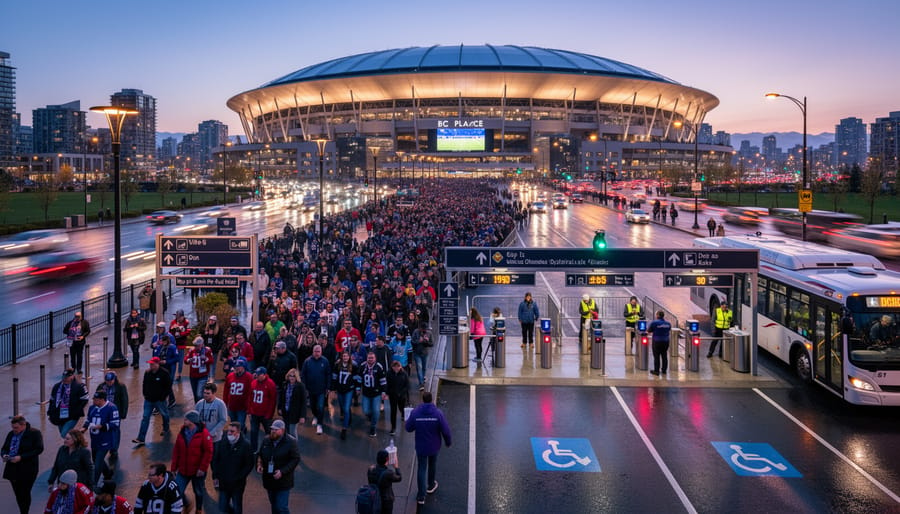
BC Place sits in downtown Vancouver at the intersection of Robson and Beatty Streets, making it one of the most transit-accessible stadiums in MLS. If you’re flying in from Ontario, the Canada Line SkyTrain runs directly from Vancouver International Airport to Stadium-Chinatown station, which drops you a five-minute walk from the stadium gates. Budget roughly 25 minutes airport-to-venue on the train, and it’s significantly cheaper than a cab.
For those driving, understand that downtown Vancouver parking runs expensive and fills quickly on match days. The stadium lot charges around $20-30, but nearby private lots and street parking within a ten-block radius offer slightly better rates if you arrive two hours before kickoff. Realistically, though, driving makes little sense unless you’re coming from outside Metro Vancouver. The public transit network here outperforms most North American cities.
The SkyTrain Expo and Millennium Lines also connect to Stadium-Chinatown station, meaning fans staying anywhere along these routes can reach BC Place without transferring. SeaBus passengers from North Vancouver should connect at Waterfront station and take the Expo Line eastbound two stops.
Arrive at least 90 minutes early for your first visit. This gives you time to explore the entertainment district stretching along Robson Street westward toward the stadium. The dozen blocks surrounding BC Place pack in everything from craft breweries to upscale dining, with Terry’s Comfort Food and The Pint Public House being particular pregame favourites among season ticket holders.
The gates typically open 90 minutes before kickoff. Security lines move efficiently compared to other MLS venues, but Friday evening matches against rivals can create bottlenecks around 30 minutes before the opening whistle.
What Sets Whitecaps Matches Apart
The Whitecaps have carved out a distinct tactical identity in MLS that separates them from the high-press, transition-heavy approach you’ll often see from Toronto FC or CF Montréal. Under current management, Vancouver emphasizes controlled possession in the middle third, building patiently through lines before exploiting width in the attacking third. It’s a measured style that prioritizes shape over chaos, which can frustrate opponents but requires discipline that not every MLS roster possesses.
What makes this approach work at BC Place is Vancouver’s commitment to developing technical players through their academy system rather than relying solely on marquee signings. The Whitecaps have consistently produced homegrown talent that understands positional play, creating a cohesive unit that doesn’t depend on individual brilliance to function. You’ll notice younger Canadian prospects getting meaningful minutes alongside veteran leadership, a developmental philosophy that distinguishes Vancouver from clubs chasing immediate playoff success through expensive roster construction.
The team’s identity reflects its geographic isolation within the Western Conference. Playing on natural grass at BC Place, a rarity in MLS, the Whitecaps build their system around maintaining possession on a true surface that rewards precise passing. Eastern Conference teams visiting from turf stadiums often struggle to adjust, particularly in the second half when fatigue exposes teams that can’t match Vancouver’s technical consistency.
From a betting perspective, this tactical approach creates identifiable patterns. Home matches tend toward lower scoring affairs with tight margins, as Vancouver’s defensive structure limits transition opportunities. The moneyline often offers better value than spread bets, and totals frequently land under posted numbers. Understanding this stylistic fingerprint, patient buildup, territorial control, defensive solidity, gives sharp bettors an edge when evaluating Whitecaps fixtures that casual observers might dismiss as boring soccer.
Common Questions About Whitecaps Soccer Matches
Can I bring a bag into BC Place?
BC Place enforces a clear bag policy for security. Only small clutches (4.5″ x 6.5″) or clear bags (12″ x 6″ x 12″) are permitted, along with one-gallon clear plastic bags. Leave backpacks and large purses at your accommodation.
What’s the weather like for evening matches?
BC Place features a retractable roof that’s typically closed during cooler months and rainy Vancouver evenings. Temperature inside hovers around 20°C regardless of conditions outside, so dress for indoor comfort rather than layering for weather.
Where can I watch matches if I’m not attending?
TSN holds primary broadcast rights for Whitecaps matches in Canada, while Apple TV’s MLS Season Pass streams all league games globally. Regional blackout rules may apply for local broadcasts, but Season Pass provides reliable access for Ontario-based fans tracking the team.
Are there family sections or alcohol-free zones?
BC Place designates family-friendly seating in the upper bowl’s southwest corner, offering a more subdued atmosphere away from supporter groups. Beer sales cut off at the 70th minute throughout the stadium.
First-time visitors often wonder about parking timelines. Arrive at least 90 minutes before kickoff if driving, as downtown Vancouver traffic intensifies on match days and lot access becomes congested within an hour of kickoff. The SkyTrain offers a smoother alternative, with Stadium-Chinatown station delivering you directly to the venue entrance.
For bettors researching the squad, understanding Vancouver’s player development pipeline matters. The club invests heavily in its academy system, regularly promoting young Canadians to the first team. These roster dynamics shift tactical approaches and create value opportunities when domestic players step into expanded roles.
The altitude advantage doesn’t exist here like it does in Colorado or Salt Lake City, but BC Place’s turf surface plays faster than natural grass. Teams accustomed to grass pitches sometimes struggle with ball speed on Vancouver’s synthetic field, particularly during their first visit of the season. Sharp bettors watch for these adjustment patterns when Eastern Conference sides make rare trips west.
Home support intensity varies by opponent. Cascadia Cup matches against Seattle and Portland transform the atmosphere completely compared to midweek fixtures against distant opponents. The crowd becomes a genuine factor under game pressure situations during these regional rivalries, with the Southsiders supporter group generating legitimate noise that affects referee decisions and visiting player composure.
Concessions accept credit cards exclusively. No cash transactions occur inside the venue, so ensure your payment cards work before entering.
The Vancouver Whitecaps represent more than just another MLS matchup on the schedule. They’re a window into Western Conference soccer that offers Ontario fans a different tactical perspective, a passionate stadium atmosphere, and genuine value whether you’re making the trip to BC Place or following from home.
For bettors, Vancouver’s home matches provide exploitable patterns and home-field dynamics that reward research. Sharp money recognizes how BC Place’s atmosphere and the Whitecaps’ specific tactical setup create edges that don’t exist elsewhere. The analysis framework we’ve covered here translates directly to profitable decision-making when the lines move.
As attendees, you’re stepping into one of MLS’s most distinctive environments. The stadium experience, the supporter culture, and the pregame scene around False Creek deliver entertainment value that extends well beyond ninety minutes of soccer. It’s the kind of immersive sports atmosphere that reminds you why live attendance still matters.
From a broader perspective, tracking Vancouver’s matches keeps you connected to league-wide trends and tactical evolution that inform how you watch and analyze soccer at every level. The same analytical lens you apply to local sports, including local player news sharpens your understanding of what drives success across MLS.
Whether you’re planning your first BC Place visit or adding Whitecaps fixtures to your betting portfolio, informed engagement wins. The framework matters more than the fixture list.