
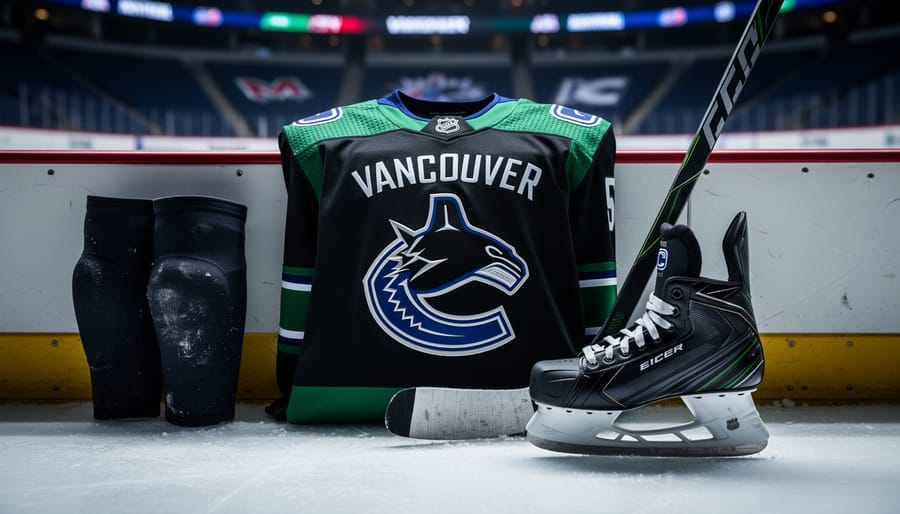
Q Hughes NHL News Update: Canucks Star Day-to-Day with Injury
Quinn Hughes is day-to-day with a lower-body injury, sidelining the Vancouver Canucks’ star defenseman after he logged over 26 minutes in Saturday’s 4-3 loss to Montreal. The injury occurred late in that game, forcing the team to shuffle its blue line just as the season enters a critical stretch.
For Canucks fans and anyone tracking Canucks player news this is the kind of update that shifts everything. Hughes has been anchoring Vancouver’s defense through nine games this season, already contributing seven points and averaging a team-high 26:38 of ice time per night. Losing that kind of presence, even temporarily, forces head coach Adam Foote to recalibrate. Victor Mancini stepped in for Sunday’s 4-3 overtime win against Edmonton, and the team wasted no time recalling Kirill Kudryavtsev from Abbotsford to add depth.
The timeline remains fluid. Day-to-day injuries offer hope for a quick return, but they also demand caution. Hughes’ ability to quarterback the power play and eat minutes in all situations makes his absence felt immediately, both on the ice and in fantasy lineups. What happens over the next few games will reveal whether this is a minor hiccup or something that forces Vancouver to lean harder on its secondary options.
What Changed: Hughes Moves to Day-to-Day Status
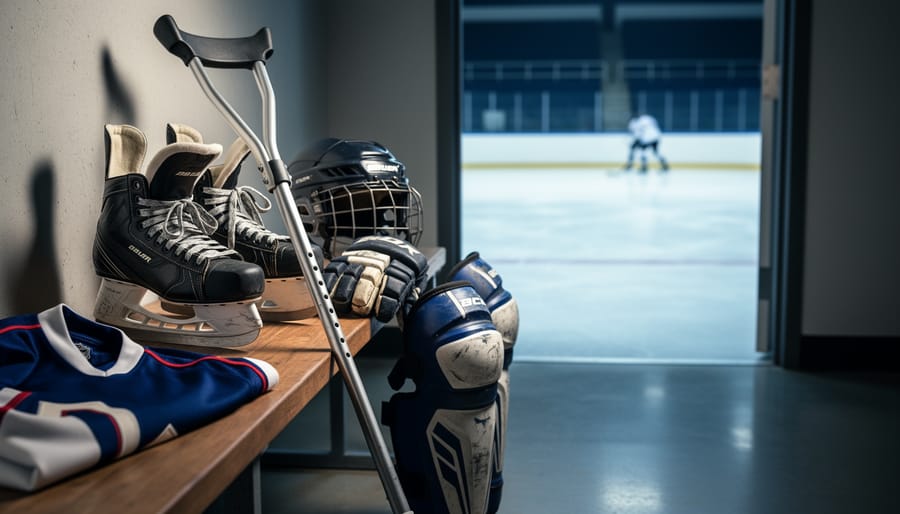
Quinn Hughes’ day-to-day designation carries significant weight for the Canucks, effectively placing the star defenseman’s availability on a game-by-game watch list. The term signals an injury that could sideline him for anywhere from one game to a couple of weeks, depending on how his lower body responds to treatment and rest. Unlike longer-term designations such as week-to-week or injured reserve, day-to-day means the medical staff believes Hughes could potentially return quickly, but there’s no guarantee he’ll be ready for the next matchup.
The injury occurred during a particularly frustrating night for Vancouver. Foote said it happened late in Saturday’s 4-3 loss to Montreal, after Hughes had already logged 26:25 of ice time and contributed two assists. The timing complicates matters, Hughes was on the ice for a full game’s worth of elite-level minutes before something went wrong, suggesting the injury might have developed gradually or resulted from a specific play in the final period. The Canucks moved quickly to manage the situation, holding Hughes out of Sunday’s overtime victory against Edmonton as a precautionary measure while they assessed the severity and began mapping out his recovery path.
Key Developments in the Canucks’ Defensive Lineup
1. Hughes’ Performance Before the Injury

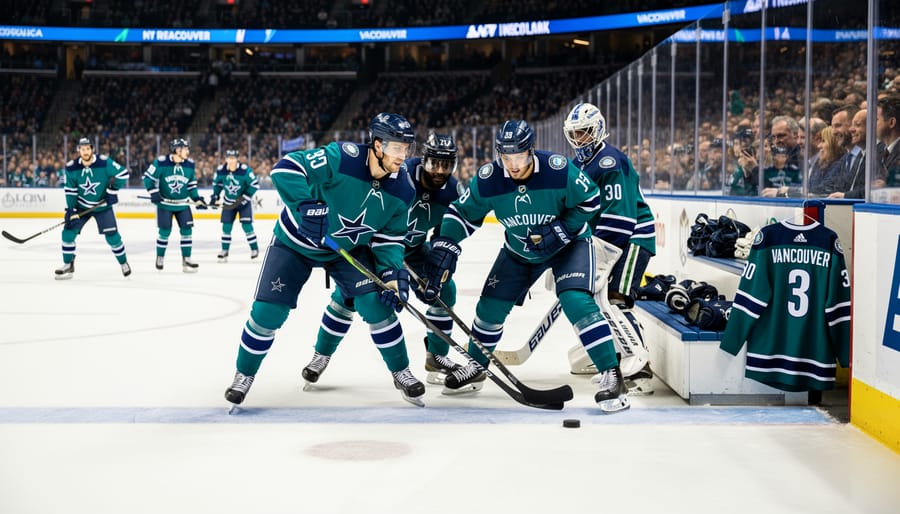
Hughes had built significant momentum before his injury struck late in Saturday’s 4-3 loss to Montreal. Hughes had two assists in that game while logging 26:25 of ice time, demonstrating his usual heavy workload even in defeat. The performance showcased exactly why Vancouver leans so heavily on their star defenseman in all situations.
Through the first nine games of 2026, Hughes’ numbers underscore his critical role:
- Seven points (one goal, six assists) in nine games
- Leading the team with an average of 26:38 ice time per game
- Anchoring the power play and transition game
- Primary quarterback for Vancouver’s offensive attack from the blue line
Those minutes tell the real story. At over 26 and a half minutes per night, Hughes shoulders more responsibility than almost any defenseman in the league. He’s on the ice for power plays, penalty kills, and every crucial even-strength shift. Coach Adam Foote relies on him to stabilize the back end, move the puck cleanly out of the defensive zone, and create offense from the point.
Losing a player who commands that much trust and ice time creates a massive void. The Canucks don’t just lose Hughes’ production; they lose his ability to control the tempo, his vision in transition, and his calming presence during high-pressure moments. That’s why his day-to-day designation carries such weight for Vancouver’s immediate playoff aspirations.
2. Victor Mancini Steps Into the Lineup
Victor Mancini drew into the Canucks lineup on Sunday and acquitted himself well in a 4-3 overtime victory against the Edmonton Oilers. The young defenseman was thrust into action with minimal notice, stepping in to help stabilize Vancouver’s blue line after Hughes went down late in Saturday’s Montreal game.
Mancini’s insertion represented more than a simple roster swap. His presence allowed Coach Adam Foote to shuffle defensive pairings and redistribute ice time across five healthy defenders rather than overtaxing the remaining veterans. While Mancini didn’t log the heavy minutes Hughes typically absorbs, he provided competent positioning and outlet passing that kept the Oilers from exploiting Vancouver’s depleted back end.
The overtime win showcased the Canucks’ depth and adaptability. Mancini’s steady play, avoiding costly turnovers and maintaining gap control, helped Vancouver escape with two points against a division rival known for explosive offensive talent. His performance wasn’t flashy, but it demonstrated the value of having NHL-ready defenders waiting in the wings.
For a team that leans heavily on Hughes to drive transition and quarterback the power play, Mancini’s successful debut under pressure offers a measure of reassurance. The Canucks can’t replace Hughes’ elite skill set through a direct substitution, but Mancini’s composed showing suggests they can manage short-term absences without catastrophic defensive breakdowns. That matters when you’re navigating a tight Pacific Division race.
3. Kirill Kudryavtsev Recalled from Abbotsford
The Canucks moved quickly to shore up their defensive depth Sunday, pulling Kirill Kudryavtsev up from their AHL affiliate in Abbotsford. The recall came on the same day Hughes sat out against Edmonton, signaling Vancouver’s front office isn’t taking chances with their blue line already stretched thin.
Kudryavtsev’s promotion speaks to how organizations prepare for worst-case scenarios even when a player carries a day-to-day designation. General managers can’t afford to wait until game day to discover they’re short-handed, especially on the back end where mistakes get magnified. By having Kudryavtsev on the NHL roster, the Canucks ensure they have a body ready to slot in if Hughes’ injury lingers or if another defenseman goes down.
Behind the scenes, these roster moves involve coordination between the NHL club and the AHL affiliate, making sure Abbotsford can still ice a competitive lineup while providing Vancouver the insurance they need. The timing of Sunday’s recall suggests the Canucks’ medical staff couldn’t give definitive clarity on Hughes’ availability for upcoming games, prompting management to act preemptively rather than risk being caught understaffed.
For a team leaning heavily on Hughes, who’s logging over 26 minutes per game, having that extra depth piece in the building offers coaching staff flexibility they wouldn’t have otherwise. It’s smart roster management, even if Kudryavtsev never takes a shift.
Why This Matters for the Canucks
Quinn Hughes isn’t just another defenseman on the Canucks’ blue line, he’s the entire engine. Averaging 26:38 of ice time through nine games this season, Hughes logs more minutes than any other Vancouver player, orchestrating the power play, driving transition from defense to offense, and anchoring the team’s most critical matchups. His seven points (one goal, six assists) reflect only part of his value; the intangibles, breakout passes, gap control, decision-making under pressure, define how the Canucks generate offense and suppress high-danger chances against.
Losing a player of Hughes’ caliber forces head coach Adam Foote into uncomfortable compromises. The power play loses its primary quarterback, the transition game slows without his ability to turn defense into offense in three quick passes, and defensive stability erodes when lesser players face top opposing lines. Vancouver’s remaining defensemen must absorb those 26-plus minutes, stretching depth and exposing mismatches that opponents will exploit. The Canucks’ system relies on Hughes’ mobility and puck-moving skill; without him, they become easier to forecheck and harder-pressed to exit their own zone cleanly.
From a game-planning perspective, opposing coaches will target the Mancini insertion and the reshuffled pairings, throwing their best lines against Vancouver’s second and third units. The Canucks’ defensive depth, already tested by this injury, now faces real-time evaluation under playoff-intensity pressure. Hughes’ conditioning and athletic training regimen typically keep him available, making this lower-body issue a rare disruption that could ripple through Vancouver’s defensive structure for however long the day-to-day designation lasts.
What to Watch: Timeline and Next Steps
With Hughes’ status uncertain, several factors will dictate Vancouver’s next moves. Daily practice participation offers the clearest signal, if he’s skating in regular drills, a return is imminent; if he’s limited or absent, the Canucks will lean on Mancini and potentially insert Kudryavtsev for additional games. Watch for official game-day morning skates, typically held around 10:30 a.m. Pacific, when coaches finalize lineup decisions and share updates with media.
The day-to-day designation typically means anywhere from missing a single game to being sidelined for a week, depending on how the injury responds to treatment and rest. Lower-body injuries can involve anything from a minor strain to a more significant muscle pull, so the timeline remains fluid until the team provides more specific information. Don’t expect concrete return dates, the Canucks will evaluate Hughes daily and make decisions based on his comfort level and mobility.
How long does a day-to-day injury usually keep a player out?
Day-to-day typically means one game to a week, depending on severity and recovery response. Teams re-evaluate daily based on symptoms and practice performance.
Should I adjust my betting strategy with Hughes out?
Consider how Vancouver’s defensive depth and opponent matchups change without their top defenseman. Check sports betting odds closer to game time when injury reports firm up.
Will Kudryavtsev play if Hughes returns quickly?
Likely not. His recall serves as insurance in case Hughes misses multiple games or another defenseman gets injured.
For bettors, Hughes’ absence meaningfully shifts Vancouver’s defensive capabilities. His 26:38 average ice time and power-play quarterbacking create a void that no single replacement can fill. Monitor how oddsmakers adjust lines for upcoming Canucks games, particularly totals and puck lines, as the team’s transition game and breakout efficiency typically suffer without their top puck-mover. Always wait for confirmed lineup information before placing wagers, and remember that day-to-day designations can swing either way right up to game time.
Quinn Hughes remains day-to-day with a lower-body injury, creating uncertainty around the Canucks’ defensive backbone as they navigate their early season schedule. The injury occurred late in Saturday’s loss to Montreal, forcing the team to reconfigure their blue line on short notice. With Hughes averaging over 26 minutes per game and leading the team’s transition play, his absence creates a significant gap that no single player can fill completely.
Vancouver’s coaching staff has moved quickly to adjust, inserting Victor Mancini into the lineup and recalling Kirill Kudryavtsev from the AHL to bolster depth options. These roster moves signal preparation for various scenarios, though the day-to-day designation suggests optimism about a relatively quick return.
For fans and sports bettors in southwestern Ontario, the key now is monitoring official Canucks updates closely. Practice participation reports and pregame availability announcements will provide the clearest signals about Hughes’ timeline. The situation remains fluid, and any projection beyond the verified day-to-day status would be speculation.
Team Broadcast will continue tracking Quinn Hughes’ status and delivering timely updates as the Canucks provide new information, ensuring our southwestern Ontario audience stays informed on one of Vancouver’s most crucial players.