Sports Psychology Courses That Sharpen Play-By-Play Instincts and On-Air Composure
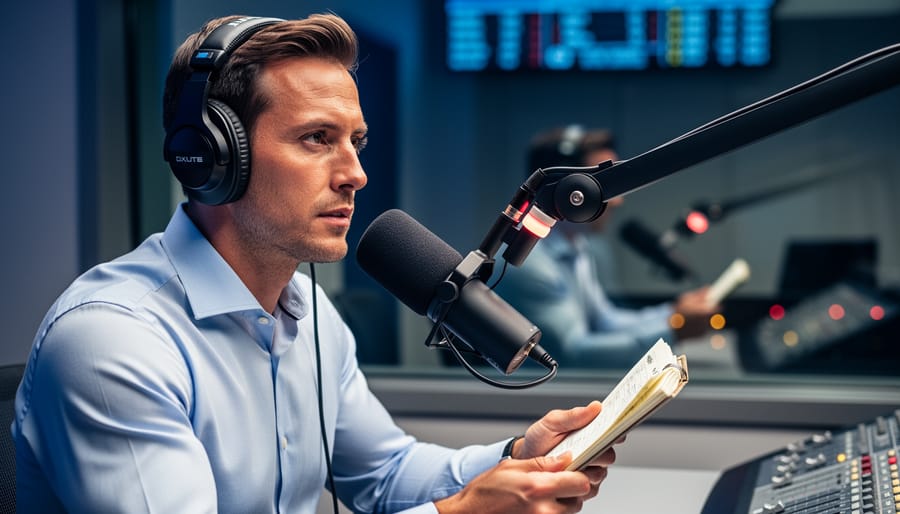
Sports psychology courses teach broadcasters the mental skills required to manage pressure, sharpen focus, and deliver credible analysis under the unforgiving spotlight of live radio. For team radio professionals covering southwestern Ontario’s sports scene, from the OHL to local betting commentary, these programs offer structured training in goal setting, concentration techniques, mental imagery, and performance evaluation. The payoff shows when you’re calling a third-period comeback or breaking down moneyline betting odds with seconds to air.
The best courses recognize that broadcasters face the same mental demands as elite athletes: maintaining composure when technology fails mid-segment, recovering from on-air mistakes without losing credibility, and sustaining energy through marathon playoff coverage. McGill University’s Sport Psychology Research Lab, led by Dr. Gordon Bloom, teaches these mental skills both in classroom settings and through applied field work. Their approach covers dealing with adversity and mental preparation for high-stakes performance, competencies that translate directly to the broadcast booth.
Online programs like Yorkville University’s Master of Arts in Counselling Psychology, which starts in January, May, and September at $50,620 total tuition, provide flexible paths for working professionals who need to balance study with on-air commitments. The program includes synchronous components that mirror the real-time collaboration radio teams require. Other options, such as UWS’s Applied Sport Psychology Graduate Certificate delivered online, allow broadcasters to build mental performance expertise without leaving their market.
For radio professionals who treat their craft with the same seriousness as the athletes they cover, sports psychology training isn’t optional development. It’s the behind-the-scenes work that separates reliable commentary from noise.
Why Broadcasters Are Turning to Sports Psychology Training
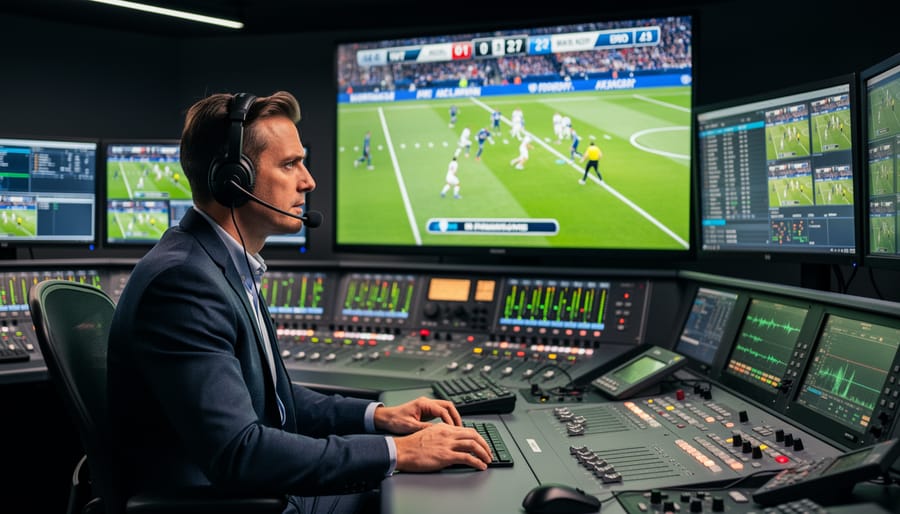
The parallels between an athlete stepping onto the field and a broadcaster going live aren’t as distant as they first appear. Both face the same core challenge: performing at their best when the stakes are highest and the margin for error is narrowest. A quarterback reading a defense in real time, a goaltender tracking a deflected puck, a point guard deciding whether to shoot or pass, each requires the same rapid decision-making and unwavering concentration that a play-by-play announcer needs when a game shifts momentum in seconds or a betting line moves during a commercial break.
For team radio professionals and broadcasters across southwestern Ontario, the mental demands of live coverage mirror athletic performance more closely than desk work. When a controversial call reverses the flow of a Bulldogs game or an underdog pulls ahead late in the third period, there’s no pause button. Broadcasters must maintain clarity, credibility, and composure while delivering instant analysis that serves both casual listeners and those tracking their wagers. The ability to manage adversity, whether it’s technical failure mid-broadcast, unexpected injury news, or a rapidly shifting point spread, separates polished professionals from those who stumble when the script falls apart.
This recognition has driven a quiet shift in how serious broadcasters approach their craft. Rather than relying solely on experience or raw talent, many now treat mental preparation as a trainable skill set, one that sports psychology programs have refined over decades of working with competitive athletes. The same techniques that help a player manage pre-game nerves or visualize executing a complex play can help a broadcaster prepare for high-pressure moments, recover from on-air mistakes, and deliver sharper commentary when listeners need it most.
Core Mental Skills Taught in Sports Psychology Programs
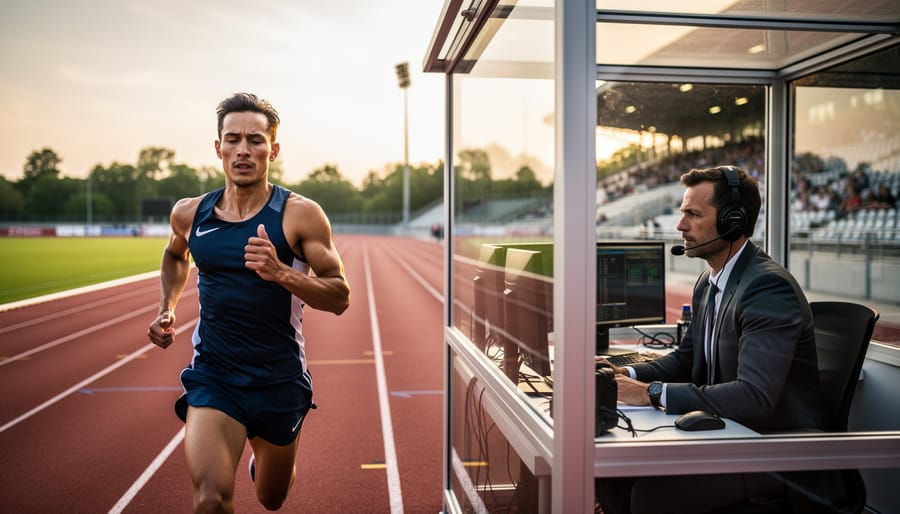
Leading sports psychology programs teach six foundational competencies that transform how broadcasters handle the intensity of live play-by-play and betting analysis. These skills, originally developed to sharpen athletic performance, now form the backbone of mental skills training for team radio professionals who face the same pressure and unpredictability as the athletes they cover.
Goal setting anchors the curriculum. Programs teach how to define clear broadcast objectives, whether that’s improving post-goal analysis speed or delivering three actionable betting insights per segment, and break them into measurable milestones. For a broadcaster preparing to cover playoff hockey, this might mean scripting ten possible overtime scenarios before air rather than winging it under pressure.
Concentration techniques address the challenge of maintaining focus during three-hour broadcasts when crowd noise, producer chatter, and live stat feeds compete for attention. Courses drill down on selective attention exercises that help you track game flow while monitoring betting line movements, filtering out distractions without missing pivotal moments.
Dealing with adversity becomes critical when technology fails mid-broadcast or a controversial call shifts game momentum. Training in this area equips you to manage frustration, maintain composure, and pivot to alternate analysis without letting stress bleed into your delivery. It’s the difference between stammering through a technical glitch and steering smoothly into a betting angle while producers fix the feed.
Mental imagery programs teach visualization rehearsal: mentally walking through your broadcast routine before the puck drops, picturing yourself delivering sharp, credible commentary even when the game goes off-script. This same technique helps broadcasters prepare for high-stakes moments, overtime goals, buzzer-beaters, so the real event feels familiar rather than overwhelming.
Mental preparation for practice and competition translates directly to pre-game routines. Programs outline how to build repeatable rituals that prime your mind for performance: reviewing team notes, running vocal warm-ups, and establishing a consistent headspace before going live.
Effective performance evaluation closes the loop. Courses teach structured self-review methods, analyzing broadcast recordings for missed cues or flat energy, and turning that feedback into targeted improvement without spiraling into self-criticism. For broadcasters covering betting markets, this means refining how you communicate odds shifts and game reads with precision and authority.
Notable Programs and Formats Available in 2026
Canadian sports psychology programs in 2026 offer working broadcasters the flexibility to build mental performance skills without abandoning the booth. The three standout options each address different needs, from foundational mental skills to specialized graduate credentials, and all accommodate the irregular schedules and travel demands of team radio professionals.
McGill University’s Sport Psychology Research Lab remains the gold standard for applied mental skills training. Dr. Gordon Bloom directs the lab’s consulting and education work, which covers goal setting, concentration under pressure, managing adversity, mental imagery, pre-performance routines, and evaluation techniques, all competencies that translate directly to live play-by-play. The lab delivers content both in the classroom and on the field, meaning broadcasters can choose immersive, hands-on workshops or theory-driven sessions depending on their learning preferences and time constraints.
For those seeking a full graduate credential, Yorkville University’s Master of Arts in Counselling Psychology offers an online format with synchronous components, live sessions that replicate the immediacy and accountability of a physical classroom. The program starts three times a year (January, May, and September), so you can align enrollment with your broadcast calendar. Total tuition runs $50,620, plus a $150 application fee. While the program isn’t exclusively sport-focused, its counselling framework equips broadcasters with the interpersonal and mental regulation tools needed to handle caller confrontations, manage on-air mistakes, and navigate the emotional volatility of live sports coverage.
UWS’s Applied Sport Psychology Graduate Certificate takes a different tack: delivered entirely online, the online applied sport psychology certificate condenses advanced performance psychology into a compact credential suited to professionals who want specialized training without committing to a multi-year master’s program. This format appeals to broadcasters who need targeted mental skills, imagery scripting for pre-game preparation, adversity protocols for blown calls or technical failures, and prefer self-paced modules over rigid weekly schedules.
| Program | Institution | Format | Start Dates | Tuition | Broadcaster Focus |
|---|---|---|---|---|---|
| Sport Psychology Research Lab | McGill University | Classroom / On-field | Varies | Contact for pricing | Applied mental skills, field practice |
| Master of Arts in Counselling Psychology | Yorkville University | Online (synchronous) | Jan / May / Sept | $50,620 + $150 fee | Emotional regulation, interpersonal skills |
| Applied Sport Psychology Graduate Certificate | UWS | Online (self-paced) | Rolling | Varies | Performance psychology, targeted mental tools |
Each format serves a distinct segment of the broadcasting community. McGill’s field-based approach suits those who learn by doing and can carve out blocks of in-person time. Yorkville’s synchronous online master’s works for broadcasters balancing full-time roles with credential-building ambitions. UWS’s certificate fits professionals who need specific, actionable mental strategies on their own timeline. The common thread is accessibility: all three programs recognize that mental training can’t wait for an off-season that never arrives in southwestern Ontario’s year-round sports calendar.
Applying Mental Training to Live Play-By-Play and Betting Commentary
Mental imagery drills borrowed from elite athletes are changing how team radio professionals prepare for weekend broadcasts. A host at a London, Ontario station now spends ten minutes before puck drop visualizing the arena’s sightlines, picturing himself calling a power-play goal and narrating a disallowed overtime marker. That routine, taught in sports psychology coursework, steadies his voice when a controversial call erupts and betting lines swing mid-period.
Pre-broadcast rituals matter most when conditions turn chaotic. Another southwestern Ontario broadcaster uses a breath-count sequence, four seconds in, six seconds out, during commercial breaks to reset concentration after a blown assignment or a flood of antagonistic callers. He credits that technique to a mental preparation module he completed online, one that emphasized composure under scrutiny. When he delivers real-time analysis of sports betting odds during a volatile third period, the measured cadence keeps his commentary credible rather than reactive.
Adversity management training also reshapes how broadcasters handle technical failures and unexpected roster changes. A play-by-play caller in Windsor rehearsed cue-card scenarios where the video feed cuts out or a key player leaves injured, situations that derail untrained announcers but become opportunities to lean on mental scripts. When the feed did fail during a playoff game, he narrated from memory and transitioned smoothly into halftime betting analysis, explaining how the injury altered local betting odds without sounding flustered.
These methods show up backstage, too. Broadcasters now debrief after each game using structured performance evaluation frameworks, not to dwell on mistakes but to extract lessons. One host reviews his read of momentum shifts and adjusts his imagery routine accordingly, ensuring next week’s live commentary feels sharper and more instinctive when the next unpredictable moment arrives.
What to Look for When Choosing a Course
When you’re ready to choose a certification or course, focus on what will actually improve your performance behind the microphone.
Start with the learning environment. If you thrive on face-to-face interaction and want real-time feedback on your delivery, a classroom-based program like McGill’s Sport Psychology Research Lab, which teaches in both classroom and field settings, might suit you. On-air professionals with packed schedules often prefer online formats like Yorkville University’s Master of Arts in Counselling Psychology or UWS’s Applied Sport Psychology Graduate Certificate, both delivered remotely so you can fit coursework around game days and broadcast commitments.
Leadership matters. Investigate who’s teaching the course. Programs led by recognized experts, such as Dr. Gordon Bloom at McGill, bring credibility and up-to-date research. Look for instructors who understand performance under pressure, not just theory.
Match the curriculum to your goals. Does the course cover concentration techniques, mental imagery, and adversity management, skills you’ll use when a game goes off-script or betting lines shift mid-broadcast? Confirm the syllabus addresses performance evaluation and pre-competition mental preparation, both directly applicable to your pre-show routines.
Schedule flexibility is non-negotiable. Yorkville’s program starts in January, May, and September, giving you options to begin when it fits your calendar. Check whether the workload accommodates weekend broadcasts and playoff coverage.
Finally, ask about applied practice opportunities. Can you test mental training techniques in simulated broadcast scenarios, or is the course purely academic? Specifics like certification or credentials vary by program, so contact providers directly to confirm what you’ll earn and whether it’s recognized in the broadcasting industry.
Common Questions About Sports Psychology for Broadcasters
Do I need a psychology background to enroll in sports psychology courses?
Most programs designed for mental performance training welcome professionals from any background, including broadcasters and team radio staff. While advanced degrees like Yorkville University’s Master of Arts in Counselling Psychology may require specific prerequisites, certificate programs and shorter courses typically focus on applied mental skills rather than clinical theory, making them accessible to working professionals without formal psychology training.
How long do these programs typically take?
Time commitment varies widely by format and depth. A graduate certificate like UWS’s Applied Sport Psychology program can often be completed in several months through online delivery, while a full master’s degree such as Yorkville’s spans multiple years with flexible start dates in January, May, and September. Shorter workshops and consultations through facilities like McGill’s Sport Psychology Research Lab may run from single sessions to semester-long engagements.
Can mental training actually improve on-air performance for broadcasters?
The same concentration techniques, mental imagery, and adversity management skills that help athletes perform under pressure translate directly to live broadcasting, particularly when managing unpredictable game moments, shifting betting lines, and rapid-fire analysis. Broadcasters who practice pre-game mental routines and visualization often report sharper focus during critical play calls and greater composure when technical issues or unexpected events disrupt their workflow.
What’s the practical time commitment for working professionals?
Online and synchronous formats accommodate broadcast schedules, allowing you to engage with coursework outside game days and production hours. Programs structured around asynchronous learning let you study during off-season periods or between shifts, while classroom or field-based components through institutions like McGill can be scheduled around your availability for hands-on practice and consulting sessions.
Recognition within the broadcasting industry remains program-dependent. While sports psychology training isn’t yet a formal credential requirement for team radio or play-by-play roles, the mental skills you develop, managing live-broadcast stress, maintaining focus during marathon game coverage, and delivering credible betting analysis under tight deadlines, create tangible performance advantages that program directors and station managers notice. Broadcasters who complete structured mental training often find themselves better equipped to handle high-stakes moments, from playoff broadcasts to breaking injury news that impacts betting markets, giving them an edge in a competitive field where composure and instant credibility matter. The investment pays off not through a certificate on the wall but through sharper on-air work and the confidence to navigate whatever a live game throws at you.
Sports psychology training offers team radio professionals and broadcasters a proven framework for elevating on-air performance when it matters most. The mental skills courses teach, concentration under pressure, rapid decision-making, mental imagery, and adversity management, translate directly to the broadcast booth, helping voices stay sharp during overtime thrillers, controversial calls, and live betting segments where credibility hinges on composure. Southwestern Ontario broadcasters who integrate these techniques into their pre-game routines and in-game workflows consistently deliver more confident play-by-play, sharper analysis of shifting momentum, and informed betting commentary that resonates with audiences who demand both expertise and authenticity. Whether you’re navigating a playoff broadcast or breaking down live odds during a tight fourth quarter, the mental edge gained from structured sports psychology coursework becomes the foundation for standout performance. As high-stakes moments multiply and listener expectations rise, investing in mental training separates competent broadcasters from those who truly command the microphone.